

As a leading supplier of vibrating screen sieves, I often encounter inquiries regarding the suitability of our products for dry screening applications. In this blog post, I aim to comprehensively explore whether a vibrating screen sieve can be effectively used for dry screening, delving into the principles, advantages, limitations, and practical considerations associated with this process.
Understanding the Basics of Vibrating Screen Sieves
Before discussing dry screening, it's essential to understand how vibrating screen sieves work. A vibrating screen sieve is a mechanical device designed to separate particles of different sizes by passing them through a mesh or screen. The screen is typically mounted on a frame and subjected to vibrations, which help to move the material across the screen surface and facilitate the separation process.
The vibrations can be generated by various means, such as electric motors, electromagnetic drives, or pneumatic systems. The amplitude and frequency of the vibrations can be adjusted to suit the specific requirements of the application, ensuring optimal performance and efficiency.
Dry Screening with Vibrating Screen Sieves
Dry screening is a common method used in many industries to separate dry materials based on their particle size. It is widely employed in mining, agriculture, food processing, pharmaceuticals, and other sectors where the separation of dry solids is required.
Principles of Dry Screening
The principle of dry screening using a vibrating screen sieve is relatively straightforward. The dry material is fed onto the top of the screen, and the vibrations cause the particles to move across the screen surface. Smaller particles that are smaller than the mesh openings pass through the screen, while larger particles are retained on the screen and discharged as oversize material.
Advantages of Dry Screening with Vibrating Screen Sieves
- High Efficiency: Vibrating screen sieves can achieve high screening efficiency, allowing for the rapid separation of large volumes of dry material. The vibrations help to prevent the particles from clogging the screen openings, ensuring a continuous and efficient screening process.
- Versatility: Vibrating screen sieves can be used to screen a wide range of dry materials, including minerals, grains, powders, and chemicals. They can be customized to suit different particle sizes, shapes, and densities, making them suitable for various applications.
- Easy Maintenance: Vibrating screen sieves are relatively simple in design and easy to maintain. They typically have few moving parts, which reduces the risk of mechanical failure and makes them easier to clean and repair.
- Cost-Effective: Dry screening using vibrating screen sieves is generally a cost-effective method compared to other separation techniques. It requires less energy and water compared to wet screening, and the equipment is relatively inexpensive to purchase and operate.
Limitations of Dry Screening with Vibrating Screen Sieves
- Dust Generation: Dry screening can generate a significant amount of dust, which can be a health hazard for workers and a source of environmental pollution. Proper dust control measures, such as the use of dust collectors and ventilation systems, are required to minimize the dust emissions.
- Particle Adhesion: Some dry materials may have a tendency to adhere to the screen surface, causing clogging and reducing the screening efficiency. This can be particularly problematic for materials with high moisture content or those that are sticky or cohesive.
- Limited Screening Precision: Dry screening may not be suitable for applications that require high precision in particle size separation. The screening efficiency can be affected by factors such as the shape and size distribution of the particles, the moisture content of the material, and the vibration characteristics of the screen.
Practical Considerations for Dry Screening with Vibrating Screen Sieves
When using a vibrating screen sieve for dry screening, several practical considerations need to be taken into account to ensure optimal performance and efficiency.
Material Characteristics
The characteristics of the dry material, such as particle size, shape, density, moisture content, and flowability, can have a significant impact on the screening process. It is important to select the appropriate screen mesh size and vibration parameters based on the material characteristics to achieve the desired screening efficiency.
Screen Selection
The choice of screen is crucial for dry screening applications. The screen mesh size, opening shape, and material should be selected based on the particle size and shape of the material to be screened. Different types of screens, such as woven wire screens, perforated plates, and polyurethane screens, are available, each with its own advantages and limitations.
Vibration Parameters
The amplitude and frequency of the vibrations can significantly affect the screening efficiency. It is important to adjust the vibration parameters to suit the specific requirements of the application. Higher amplitudes and frequencies can increase the screening efficiency but may also cause more wear and tear on the screen and the equipment.
Dust Control
As mentioned earlier, dry screening can generate a significant amount of dust. Proper dust control measures, such as the use of dust collectors, ventilation systems, and enclosures, should be implemented to minimize the dust emissions and ensure a safe working environment.
Maintenance and Cleaning
Regular maintenance and cleaning of the vibrating screen sieve are essential to ensure optimal performance and longevity. The screen should be inspected regularly for damage and wear, and any damaged or worn parts should be replaced promptly. The screen should also be cleaned regularly to remove any accumulated material and prevent clogging.
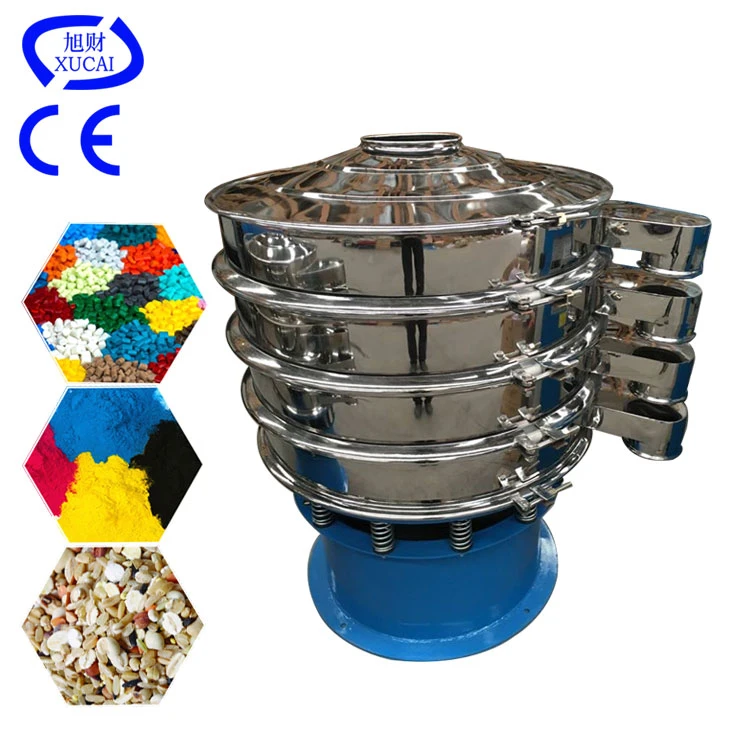

Our Vibrating Screen Sieve Products for Dry Screening
As a supplier of vibrating screen sieves, we offer a wide range of products suitable for dry screening applications. Our Industrial Vibrating Screen is designed for high-capacity screening of dry materials, such as pellets, grains, and minerals. It features a robust construction, high screening efficiency, and easy maintenance.
Our Stainless Steel Circular Vibrating Sieve is ideal for applications where hygiene and corrosion resistance are important, such as food processing and pharmaceuticals. It is made of high-quality stainless steel, which is easy to clean and maintain.
Our Industrial Vibrating Sifting Sieve For Powder is specifically designed for the screening of fine powders. It features a unique design that ensures efficient screening and prevents the powder from clogging the screen openings.
Conclusion
In conclusion, a vibrating screen sieve can be effectively used for dry screening applications in many industries. It offers several advantages, such as high efficiency, versatility, easy maintenance, and cost-effectiveness. However, it also has some limitations, such as dust generation, particle adhesion, and limited screening precision.
When using a vibrating screen sieve for dry screening, it is important to consider the material characteristics, screen selection, vibration parameters, dust control, and maintenance and cleaning requirements. By taking these factors into account, you can ensure optimal performance and efficiency of the screening process.
If you are interested in learning more about our vibrating screen sieve products for dry screening or have any questions or inquiries, please feel free to contact us. We would be happy to assist you in finding the right solution for your specific needs.
References
- Perry, R. H., & Green, D. W. (Eds.). (2008). Perry's Chemical Engineers' Handbook (8th ed.). McGraw-Hill.
- Svarovsky, L. (1990). Solid-Liquid Separation (3rd ed.). Butterworth-Heinemann.
- Wakeman, R. J., & Tarleton, E. S. (2005). Solid/Liquid Separation Equipment Scale-Up. Elsevier.