

Water Cooled Chiller
Why Choose Us
Profession
We specialize in the production of plastic crusher, plastic shredder, plastic mixer, vibrating screen, mold temperature controller, industrial water chiller, vacuum auto loader, hopper dryer.
Service
Free technical consultation, quote reply within 8 hours on working days, troubleshooting solution within 8 hours, free accessories during warranty period, lifelong technical support for the machine.
Public Praise
Adhere to the concept that product quality is the life of the enterprise. We are diligent, all to performance. We are proud, all to transform. We are product, all to help customers solve problems and save costs.
Our Product
Plastic crusher, plastic shredder, double shaft shredder, plastic mixer, plastic dryer, vacuum auto loader, industrial water chiller, mold temperature controller, vibrating sieve, dewatering machine, screw feeder, powder auto loader, Industrial water chiller, Knife sharpener, water cooler tower, plastic recycling line, baler, conveyor, etc.
What is Water Cooled Chiller?
A water-cooled chiller is one of the types of chillers that removes heat from it to cool the water used in projects or industrial or domestic structures and re-enters the water into the operation cycle. In fact, chillers transfer heat from a space that needs temperature control and transfer it to another space.


What Are The Benefits Of Water Cooled Chiller?
Great Lifespan
First and foremost – water-cooled chillers are extremely durable and dependable, and they can last for a very long time. These units are located indoors and are not exposed to the elements. This means that you are not likely to receive any significant breakages and setbacks during your rental period, allowing you to focus your attention on the more important aspects of your operations.
Very Quiet Operations
Water-cooled chillers are extremely quiet during normal operations. The flow of water throughout the system creates far less noise than air. This results in reduced noise levels of water-cooled chillers. Quiet operation is paramount for various environments, such as schools and hospitals, where noise can easily disturb the occupants.
No Need For Open Space
Although water-cooled chillers are housed indoors, they do not need a large amount of open space to operate properly. Additionally, because technicians install water-cooled chillers indoors, this solution is ideal for those commercial properties that do not have access to sprawling outdoor areas required to accommodate air-cooled chillers.
Excellent Safety
In water-cooled chiller systems, water is the main refrigerant and there are usually no additions of various potentially harmful chemicals. This absence of artificial refrigerants makes water chillers the safest possible solution for cooling a commercial building or an industrial manufacturing facility.
Cost-Effectiveness
Water-cooled chiller systems use water to provide cooling. However, these systems recirculate the water they use, allowing them to minimize the use of water and provide a cost-effective alternative to air-cooled chillers. Also, they do not require water discharge monitoring and government-related annual permits.
In-Depth Process Control
Modern water-cooled chillers feature sophisticated process optimization controls that allow them to provide maximum cooling capacity at maximum energy efficiency. Also, such features allow these chiller systems to achieve zero downtime, ensuring continual operation at your desired level.
Components of a Water Cooled Chiller
Compressor
The compressor is the core of the whole air conditioning system, and also the source of system power. The entire power of the air conditioning, all provided by the compressor, the compressor is equivalent to a physical move from a low potential to a high potential place to go, in the air conditioning, its purpose is to the low-temperature gas compressed by the compressor into a high-temperature gas, and finally the gas in the heat exchanger and other media for heat exchange. Therefore, the quality of the compressor will directly affect the effectiveness of the entire air conditioning.
Condenser
The function of the condenser is to cool the high temperature and high-pressure refrigerant superheated vapor discharged from the compressor into liquid or gas-liquid mixture. The heat emitted from the refrigerant in the condenser is taken away by the cooling medium (water or air).
Water-cooled chillers generally use water-cooled condensers. Water-cooled condensers use water as the cooling medium, and the temperature rise of the water takes away the heat of condensation. The cooling water is generally recycled, but a cooling tower or cooling pool is required in the system. The water-cooled condenser can be divided into shell-and-tube condenser and cannula condenser according to its structure form, and the common one is the horizontal shell-and-tube condenser.
The two ends of the horizontal shell-and-tube condenser tube plate are each closed with an end cap, which is cast with a water separator rib designed to match each other, separating the whole tube bundle into several tube groups. Thus the cooling water enters from the lower part of one end cover, flows sequentially through each tube group, and finally flows out from the upper part of the same end cover in the process of 4 to 10 round trips. This can not only increase the flow rate of the cooling water inside the tube, thus improving the heat transfer coefficient, but also make the high-temperature refrigerant vapor from the shell to the end of the tube.
The upper inlet tube enters the bundle of tubes to exchange heat with the cooling water inside the tube. Condensation down the liquid from the lower liquid tube into the liquid storage tank. The cooling tubes of Freon horizontal condensers are generally low-rib copper tubes. This is due to the low heat release coefficient of Freon. It is noteworthy that some Freon refrigeration units are generally not set storage cylinders, only the bottom of the condenser less set up a few rows of tubes, also used for a storage cylinder.
Evaporator
The function of the evaporator is to use the liquid low-temperature refrigerant to evaporate easily under low pressure, change into vapor and absorb the heat of the medium to be cooled, so as to achieve the purpose of refrigeration.
Water-cooled chillers generally use a tank-type (immersion type) evaporator. The refrigerant evaporates in the tube, and the whole evaporator tube group is immersed in the box full of refrigerant. This evaporator can only be used for an open circulation system, so the refrigerant must be non-volatile substances, commonly used as saltwater and water. If the brine is used, the evaporator tube is easy to be oxidized, and the brine is easy to absorb moisture to reduce the concentration. This evaporator can directly observe the flow of the refrigerant carrier.
Thermal expansion valve
It controls the refrigerant flow into the evaporator by feeling the superheat of the gaseous refrigerant at the outlet of the evaporator. According to different balancing methods, thermal expansion valves are divided into external balancing type and internal balancing type.
How Does a Water Cooled Chiller Work?
The starting point of this cycle is where the water in the production process enters the evaporator to enter the chiller cycle.
In this part of the cycle, the heat absorbed by the refrigerant first shows itself in the form of a liquid-to-gas phase change. As the refrigerant absorbs the heat of the water, the environment in contact with this part drops in temperature, so the water leaves at a lower temperature. This water enters the fan coils and brings cold air to the desired spaces.
The gas refrigerant, which had reached the gas phase in the pre-liquid state, then enters the compressor. In the compressor, the gas condenses and the temperature and pressure increase so that it can enter the next stage with high pressure. This increase in pressure and temperature as it exits the compressor is important because the refrigerant needs to release heat from inside the condenser, so it must carry enough heat to the condenser.
The third step takes place inside the condenser. High-temperature gas enters the condenser. In the condenser, the gas refrigerant is converted to a high-pressure liquid that is saturated. This is a constant pressure process.
On the other hand, since the condenser is present in another cycle between the cooling towers, water enters the cooling tower after the temperature rises for the water. Because cooling towers in water-cooled chillers have the main task of cooling the consumed water and the condenser uses this water as its driving material.
The expansion valve is the last stage that the refrigerant goes through. This milk, as its name implies, expands and reduces the refrigerant. These processes that take place on the refrigerant in the expansion valve cause the refrigerant to become a mixture of liquid and gas. Eventually, the same compound re-enters the evaporator to resume the cycle with hot water re-entering the evaporator from another direction.

Despite their many advantages, selecting an industrial water chiller involves careful consideration. These high-capacity units are complex and must be tailored to specific application needs. Choosing the right chiller requires a detailed understanding of the application or range of applications it will support.
Water chiller manufacturers collaborate closely with clients to design, engineer, and build chillers that meet precise industry and temperature requirements. During the initial phase, experts visit client facilities to assess working conditions and determine the necessary temperature levels. This collaborative approach ensures that the chiller is well-suited to the specific conditions and requirements.
In the early stages of the selection process, manufacturers aim to choose a chilling system that aligns with both the environmental needs and the client’s budget. This partnership ensures that the chosen chiller is appropriate for the situation. For special temperature requirements or unique environments, manufacturers are prepared to engineer custom solutions. Additionally, water chiller manufacturers ensure that their equipment complies with the strict standards set by the Environmental Protection Agency (EPA).
Cooling Fluid - The fluid for an industrial water chiller is chosen for its performance and equipment compatibility. The performance of a fluid is determined by its properties at a given temperature, such as its heat, viscosity, and freezing and boiling points.
Fluid Temperature - A water chiller’s cooling capacity is affected by its setpoint temperature. Lower temperatures increase the load on the system while higher temperatures decrease the load.
Pressure and Flow Requirements - As can be seen by the description of a water chillers operation, pressure plays a large part of a systems operation. In order for a system to perform properly, it must have a pump that meets the needs of the system. Additionally, the flow rate, in conjunction with the pressure, is a major factor in the process of heat transfer.
Chiller Size - Selecting the correct size of a chiller for a process is the function of the chiller manufacturer, who has all of the necessary data and expertise required to match the right chiller with a process, operation, or function.
How to Maintain the Water Cooled Chiller?
Observe and check the quality of the oil regularly
Once the quality of the oil becomes a problem, it can threaten the operational efficiency and safety of the chiller unit. If a problem is found, it should be replaced promptly. The brand of lubricant to be replaced must comply with the manufacturer's regulations.
Check and replace the filter drier regularly
The dry filter plays the role of separating refrigerant and water. When a fault occurs, water and refrigerant enter the unit at the same time, which will cause irreversible harm to the unit, such as liquid-strike compressor, reduced refrigeration efficiency, capillary ice blockage and other faults.
Regular inspection of the safety valve of the unit
The safety valve located at the high pressure end of the condenser is an automatic pressure relief device, which can automatically release pressure when the pressure exceeds the normal pressure, so as to prevent the high pressure from harming the human body and avoid safety accidents caused by high pressure. Therefore, the safety valve should be checked regularly.
Rational charging of refrigerant according to regulations
If there are no other special reasons, generally the unit will not leak a lot. If a certain amount of refrigerant leakage occurs due to improper use or after maintenance, it is necessary to add refrigerant again.
Our Factory
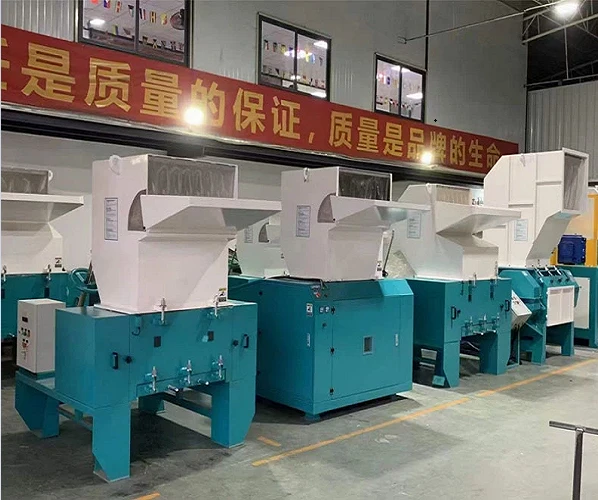
Our company has 11 years of production experiences in OEM processing services for plastic auxiliary equipment before its establishment. We always adhere to the "quality of survival, integrity management" as the value of Xucai environmental technology. Our company's products have passed the Europe CE certification. We strictly controls the whole process of product design, production, quality inspection and after-sale service, making Xucai's machines sell well domestic and foreign and received a consistent praise. Our machines have been sold to more than 50 countries and regions around the world.

FAQ
We're well-known as one of the leading water cooled chiller manufacturers and suppliers in China. Please feel free to buy high quality water cooled chiller made in China here from our factory. For price consultation, contact us.