

Vacuum Auto Loader
Why Choose Us
Profession
We specialize in the production of plastic crusher, plastic shredder, plastic mixer, vibrating screen, mold temperature controller, industrial water chiller, vacuum auto loader, hopper dryer.
Service
Free technical consultation, quote reply within 8 hours on working days, troubleshooting solution within 8 hours, free accessories during warranty period, lifelong technical support for the machine.
Public Praise
Adhere to the concept that product quality is the life of the enterprise. We are diligent, all to performance. We are proud, all to transform. We are product, all to help customers solve problems and save costs.
Our Product
Plastic crusher, plastic shredder, double shaft shredder, plastic mixer, plastic dryer, vacuum auto loader, industrial water chiller, mold temperature controller, vibrating sieve, dewatering machine, screw feeder, powder auto loader, Industrial water chiller, Knife sharpener, water cooler tower, plastic recycling line, baler, conveyor, etc.
What is Vacuum Auto Loader?
A vacuum autoloader is a machine used to load plastic resin from a drum or bin into a hopper. The hopper then loads the resin into an injection molding machine. There are several types of vacuum loaders, including single-station loaders and central loaders.


Types of Vacuum Auto Loader
A Vacuum Auto Loader is a machine used to load plastic resin from a drum or bin into a hopper. The hopper then loads the resin into an injection molding machine. There are several types of vacuum loaders, including single-station loaders and central loaders. Below are some of the common types of vacuum auto loaders:
Single-station loaders: They are also known as self-contained loaders. These loaders are positioned over the processing machine's material hopper. They are used to load a single material at a time. Single-station autoloaders are popular in small-scale manufacturing settings where only one plastic type is processed.
Central vacuum loaders: They are used to convey plastic resin materials from multiple sources (material storage bins, silos, etc.) to multiple processing machines. Central vacuum loaders are popular in large-scale manufacturing setups where there is a need to handle different plastic types and multiple processing machines. These loaders use a central control system to manage the loading process from different sources to different processing machines. The central control system can be programmed to schedule material conveying for various production lines.
Portable loaders: They are compact and lightweight autoloaders that are easy to move around the production floor. Portable autoloaders have wheels or casters that allow for easy movement. They can be used to load plastic resin into different processing machines based on production demands. Portable autoloaders are also suitable for use in small-scale manufacturing settings where production machines are occasionally repositioned.
Mini-loaders: They are smaller versions of standard vacuum loaders. Mini-loaders are suitable for use in space-constrained areas. They are more compact than standard autoloaders. These autoloaders have a limited loading capacity due to their small size.
Gravimetric loaders: These are autoloaders with integrated scales or load cells. The scales are used to measure the weight of plastic resin loaded into the processing machine. Gravimetric autoloaders offer more accurate resin loading as compared to other types of autoloaders. They help to control material consumption and ensure consistent part quality. However, they are more expensive than other loaders.
High-capacity loaders: These autoloaders are designed to handle large volumes of plastic resin. They have larger hoppers and stronger vacuum pumps to move large quantities of material. High-capacity autoloaders are suitable for use in heavy-duty manufacturing settings with high production demands.
Vacuum autoloader is known as the most useful in the industry. The product is very useful in terms of saving time, efforts and money. The vacuum autoloader reduces the total time required in loading or unloading the material.
Vacuum autoloader features include high efficiency, low noise, dust free, quick drying, dust-free, rust proof, water tight and safe. This specific vacuum autoloader has all these qualities. It has been found out that it possesses dust-free conveyor system that has lesser chances of deposition of the material on the sides. On the other hand, the heat insulation system of this item prevents the formation of rust on the exterior surfaces. Due to all these qualities, this particular product is considered as an ideal conveyor by the experts.
Vacuum autoloader hopper comes with high-tech design which is capable of providing fast service in terms of loading and unloading. The rate at which the material can be loaded and unloaded in this type of hopper is much faster compared to any other device. When we talk of the rate at which the product can be loaded in the hopper, it can easily load the material in less than five minutes. Moreover, the loading rate in this specific hopper is almost seventy percent faster than that of the traditional conveyors. Due to all these qualities, the experts named this particular model as the best conveying system for the purpose of maximum productivity and maximum volume of production.
Another significant feature of this particular vacuum autoloader hopper is that it is very safe and easy to use. In the present era, most of the manufacturing industries are making use of plastic molding systems for the purpose of rapid production and increased productivity. In order to increase the productivity, it becomes essential to make a proper use of the plastic molding tools. This product has all the components for easy usage like the adjustable feed lips, non-stick wheels, non-stick floor plates, the vacuum motor and plenty of space for the working area and the assembly point. Besides, it also features overload protection and air flow control for additional safety.
One of the main advantages of using this unit is that it has the ability to maintain the appropriate level of moisture without causing any damage to the working area or the material. As the most suitable method to convey the material from one place to another, it prevents the material shortage during the transportation. Besides, the vacuum hopper also helps in overcoming the heavy workload and other complications of the production process.
Scenarios of Vacuum Auto Loader
A vacuum autoloader is a valuable device used in diverse industries. Here are some typical application scenarios of the vacuum autoloader.
Plastic manufacturing industry
In the plastic production process, the vacuum autoloader plays a significant role in transporting and loading raw materials or plastic pellets into the hopper of plastic extruders, injection molding machines, and other equipment. It helps automate the production process, improve efficiency, and reduce material handling errors.
Food processing industry
In the food processing industry, the vacuum autoloader is used to transfer a wide range of food ingredients, such as powders, grains, and additives, from storage containers to mixers, packaging machines, and other processing equipment. It ensures accurate ingredient loading, minimizes contamination risks, and maintains hygiene standards.
Chemical industry
In the chemical industry, the vacuum autoloader is applied to convey chemical powders, granules, or liquids to mixers, reactors, and filling machines. It helps to improve the safety and precision of material handling, reduce the risk of spills, and ensure the integrity of the production process.
Pharmaceutical industry
In the pharmaceutical industry, the vacuum autoloader is used in pharmaceutical manufacturing to transfer active pharmaceutical ingredients, excipients, and powders to tablet presses, encapsulation machines, and other equipment. It enables batch traceability, prevents cross-contamination, and complies with stringent regulatory requirements.
Automotive industry
In the automotive industry, the vacuum autoloader can be used for the automatic loading of plastic pellets, metal powders, or other materials into automotive part manufacturing equipment, such as injection molding machines, 3D printers, and CNC machines. It ensures consistent material supply, supports just-in-time production, and contributes to the quality of automotive components.
Electronics industry
In the electronics industry, the vacuum autoloader is often utilized to feed electronic components, such as chips, resistors, and connectors, to pick-and-place machines, soldering equipment, and assembly lines. It facilitates high-speed production, reduces the risk of component damage, and maintains production efficiency.
Purchase Instructions Of Vacuum Auto Loader

Equipment performance parameters: Consider the equipment’s conveying capacity, applicable material type (powder, granular, etc.), operating voltage and power parameters to ensure that the equipment can meet your production needs.
Safety: Ensure that the equipment has the necessary safety devices and protection facilities, such as emergency stop switch, overload protection, etc. Operator safety training is also essential.
Maintenance: Understand the maintenance and maintenance requirements of the equipment, including regular inspection, cleaning filters, replacement of worn parts, etc., to ensure long-term stable operation of the equipment.
After-sales service: Consider the supplier’s after-sales service quality, including technical support, spare parts supply and warranty policy.
Environmental protection and energy saving: Choosing environmental protection and energy saving equipment can reduce production costs and reduce environmental pollution.
Equipment compatibility: Ensure that the automatic suction machine is compatible with existing production lines and other equipment for seamless integration.
Supplier reputation: Choose a reputable supplier, the quality of equipment and after-sales service are guaranteed.

How Does Vacuum Auto Loader Work?
Material Collection
Raw materials, often plastic resin or pellets, are stored in a designated container or hopper connected to the hopper loader.
Vacuum Creation
The hopper loader uses a vacuum pump or blower to create a vacuum or negative pressure within its system.
Transportation
The materials travel through the hose or pipeline, driven by the vacuum pressure created by the hopper loader.
Material Conveyance
When the processing machine requires more material, the hopper loader's vacuum draws the raw materials from the container or hopper through a hose or pipeline.
Loading into Processing Equipment
The materials are conveyed directly into the hopper of the processing machine, such as an injection molding machine. This automatic loading process ensures a continuous supply of raw materials to the processing equipment.
Controlled Supply
Sensors or switches within the processing equipment or the hopper loader monitor material levels. When the material reaches a certain level, the hopper loader can stop conveying material until more is needed, ensuring proper control of material supply.
The Future Development Trends Of Vacuum Auto Loader
Intelligentization: With the continuous development of Internet of Things (loT) technology, feeding machines will possess more intelligent features, such as adaptive control, fault prediction, and self- maintenance. These intelligent functions will assist businesses in better production management and maintenance, thereby improving production efficiency and quality.
Automation: Feeding machines will further realize automated production by replacing traditional operators with robots or automated systems. This not only reduces operating costs but also enhances production efficiency and safety. incorporating virtual reality technology can provide operators with a clearer understanding of the feeding machine's operational status, enabling more effective management and control.
Visualization: The level of visualization in feeding machines will continue to improve. For example, incorporating virtual reality technology can provide operators with a clearer understanding of the feeding machine's operational status, enabling more effective management and control.
Operation Process of Vacuum Auto Loader
Standby
After the autoloader is connected to a power source, the power lamp will be on, but the display screen not on. It is called a “Shutdown” state.
Power On
Under the Shutdown condition, press the On/Off button, and the system starts up.
If it is detected full material condition at this time, the RUN light flashes and the FULL light is on, the digital display showing the set loading time.
If the lack of material is detected, the system will suck material according to the set mode.
If there is a material shortage alarm, the system will stop working, the material shortage alarm flickers and the alarm relay will turn off.
Shutdown
Under the power-on condition, press the On/Off button, and the system will return to the “Shutdown” state.
Our Factory
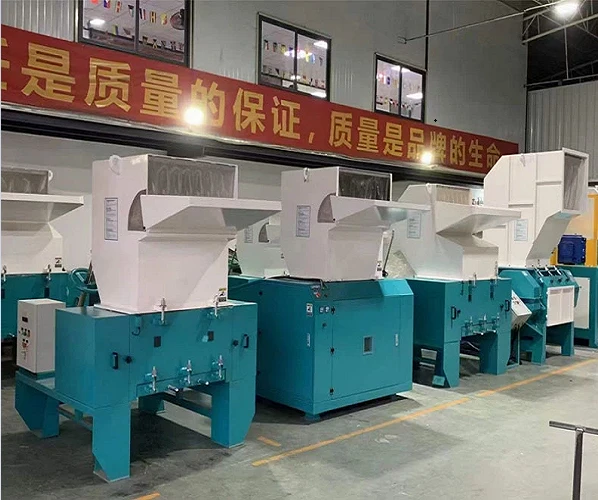
Our company has 11 years of production experiences in OEM processing services for plastic auxiliary equipment before its establishment. We always adhere to the "quality of survival, integrity management" as the value of Xucai environmental technology. Our company's products have passed the Europe CE certification. We strictly controls the whole process of product design, production, quality inspection and after-sale service, making Xucai's machines sell well domestic and foreign and received a consistent praise. Our machines have been sold to more than 50 countries and regions around the world.

FAQ
We're well-known as one of the leading vacuum auto loader manufacturers and suppliers in China. Please feel free to buy high quality vacuum auto loader made in China here from our factory. For price consultation, contact us.
advanced auto loader with intelligent control, efficient loading solution, high capacity loading machine