

Vibrating Sieve
Why Choose Us
Profession
We specialize in the production of plastic crusher, plastic shredder, plastic mixer, vibrating screen, mold temperature controller, industrial water chiller, vacuum auto loader, hopper dryer.
Service
Free technical consultation, quote reply within 8 hours on working days, troubleshooting solution within 8 hours, free accessories during warranty period, lifelong technical support for the machine.
Public Praise
Adhere to the concept that product quality is the life of the enterprise. We are diligent, all to performance. We are proud, all to transform. We are product, all to help customers solve problems and save costs.
Our Product
Plastic crusher, plastic shredder, double shaft shredder, plastic mixer, plastic dryer, vacuum auto loader, industrial water chiller, mold temperature controller, vibrating sieve, dewatering machine, screw feeder, powder auto loader, Industrial water chiller, Knife sharpener, water cooler tower, plastic recycling line, baler, conveyor, etc.
What is Vibrating Sieve?
Vibratory sieve, also known as a vibrating sieve or vibrating screen, is a mechanical screening device used to separate particles by size through the vibration of a sieve surface.


What Does a Vibrating Sieve Machine Do?
Vibrating sieving machine is a kind of equipment used for material sieving and screening. It is widely used in metallurgy, chemical industry, mining, building materials, grain, chemical fertilizer, plastic, medicine and other industries. It has the following functions:
Screening: The vibrating screening machine can divide granular, powdery, liquid and other materials into different grades according to different sizes, and separate large particles, medium particles and small particles to meet the needs of different industries and products for granular materials.
Screening: The vibrating screening machine can remove deformities, such as agglomerates, burrs, foreign objects, etc., to ensure product quality.
Removing impurities: The vibrating screening machine plays a very important role in removing impurities in the granules during production, such as removing sliders, stones and moisture in the granules.
Particle size determination: According to the different particle size requirements of users, the vibrating screening machine can determine the standard particle size well to ensure the stability of product size.
Material separation: With the help of the vibration principle of the vibrating screening machine, materials can be separated according to density, which can be widely used in chemical industry, building materials, mining and other industries.
Types of Vibrating Screen
Rotary vibrating screen
Rotary vibrating screeners use the simple adjustment of counterweights on the motor shaft and the three-dimensional vibration they generate to screen materials, can be used to remove broken or undersized products, and can provide up to 5 levels of classification in a single operation to Achieve precise particle size distribution, sieving up to 500 mesh. Different configurations can be selected according to the characteristics of the screened materials, such as mobile type, ultrasonic cleaning type, direct discharge type, mud high frequency type, water spray type, gate type, etc.
Linear vibrating screen
The linear vibrating screen is to screen and move the product in a straight line, so the use of a rectangular screen allows the product to have more time to pass through the grid, and the wire screen can also effectively transport the product and can sometimes be used to replace traditional conveyors. Because its length allows the fine product a chance to separate from the larger particles and fall into the screen. This makes linear sieves ideal for dust removal or dewatering operations, such as removing small loose crumbs and flour from finished biscuits.
Cyclone screener
Cyclone screener use a set of paddles to push the product out of the screen cylinder, spin them at high speed and apply centrifugal force to the product, the cylinder is mounted horizontally, so a slight twist is applied to the paddles to move the product down the length of the cylinder, And use an auger to feed the paddles at a steady speed. These paddles force product through the screen, giving them higher throughput compared to shakers, and the motion of the rotating auger and paddle assembly has the added benefit of breaking up lumps or separating compacted product.
Laboratory vibrating screen
Laboratory vibrating screens are mainly used in the laboratory to classify and analyze the particle size of powders, granules and suspensions. Samples of different sizes are separated by sieves of different sizes, which can quickly and efficiently measure sizes from 125mm to 20μm, and can stack 8 layers of sieve frames (including feeding trays).
Mine vibrating screen
Mining vibrating screens are used for material sorting and final product separation at different stages of the crushing process, available in single-layer, double-layer and triple-layer configurations, suitable for the screening of sand and gravel in quarries, and also for coal preparation , mineral processing, building materials, electric power, chemical and other industries product classification.
Efficient Material Separation: Vibratory screens are highly effective in separating materials based on their size, shape, and composition. They can efficiently classify particles into different categories, such as fine, medium, and coarse.
Versatility: These screens are versatile and can be used to process a wide range of materials, including solids, powders, liquids, and slurry. They find applications in industries such as mining, agriculture, food processing, and recycling.
High Throughput: Vibratory screens can handle large volumes of material quickly. Their high-frequency vibrations and large screening area allow for high throughput rates, increasing productivity in various processes.
Scalability: Vibratory screens come in various sizes and configurations, making them adaptable to different processing requirements. They can be customized to fit specific industrial needs.
Minimal Maintenance: Vibratory screens typically have low maintenance requirements. They are designed with few moving parts, reducing the chances of mechanical failure and lowering maintenance costs.
Energy Efficiency: These screens are often energy-efficient. They use vibratory motors or eccentric shafts to generate vibrations, which require less power compared to other separation methods.
Precise Sizing: Vibratory screens offer precise control over particle sizing. This precision is essential in industries where accurate size separation is critical, such as in pharmaceuticals or mining.
Reduced Noise and Dust: Vibratory screens can operate quietly and help reduce dust emissions, making them suitable for indoor and outdoor use.
Customizable Design: Manufacturers can tailor the design and configuration of vibratory screens to meet specific application requirements, ensuring optimal performance and efficiency.
Easy Maintenance: Cleaning and maintaining vibratory screens is relatively straightforward. They are designed for easy access and cleaning, which helps maintain hygiene and prevent cross-contamination in industries like food processing.
Longevity: When properly maintained, vibratory screens can have a long service life, contributing to cost-effectiveness in industrial processes.
Self-Cleaning: Some vibratory screens are designed with self-cleaning mechanisms, such as ball decks or sliders, which prevent material clogging and blinding of the screen surface.
Components Of Vibrating Sieve


Screen Body
The screen body is the main structure of the vibrating screen. It is typically made of welded or bolted steel parts and serves as a supporting base for the screen mesh.
Screen Mesh
The screen mesh is the actual screen surface where the material is separated. It can be made of various materials such as metal, woven wire, polyurethane, rubber, or perforated plates. The choice of material and the configuration of the mesh depend on the specific application and the type of material being screened.
Vibration Mechanism
The vibration mechanism is responsible for generating the vibratory motion of the screen. It usually consists of eccentric shafts, counterweights, and other mechanical parts. The vibration motion agitates the material, allowing smaller particles to fall through the openings in the screen mesh.
Drive Motor
The drive motor provides the power to operate the vibrating screen. It is connected to the vibration mechanism and generates the necessary force to create the vibratory motion.
Springs and Suspensions
Springs or other suspension systems are used to support and isolate the vibrating screen from the surrounding structure. Proper suspension is essential to ensure smooth and efficient operation, as it absorbs excessive vibrations and allows the screen to move freely.
Supporting Structure
The supporting structure includes beams, columns, and other components that provide stability and support for the vibrating screen. It ensures that the screen operates smoothly without excessive vibration or wobbling.
Clamp Rings and Seals
Clamp rings are used to secure the screen mesh to the screen body. Seals are often added to prevent leakage of material and minimize dust emissions during the screening process.
Dust Enclosures and Covers
Dust enclosures and covers are optional components designed to contain dust and prevent it from escaping into the surrounding environment. They contribute to a cleaner and safer work environment.
Isolation Springs and Bearings
Isolation springs and bearings are essential for absorbing vibrations and ensuring smooth operation. Properly designed bearings reduce friction and wear, extending the lifespan of the vibrating screen.
Drive Belt and Pulleys (if applicable)
In some vibrating screens, especially larger ones, drive belts and pulleys are used to transmit power from the motor to the vibration mechanism.
How To Maintain A Vibrating Screen?
Conduct routine inspections of the vibrating screen to identify any signs of wear, damage, or potential issues. Inspect the screen media, including wire mesh, polyurethane panels, or rubber, for tears, holes, or excessive wear. Check the structural components, such as the frame, supports, and cross beams, for any signs of fatigue or damage.
Proper lubrication is essential for the smooth operation of vibrating screens. Regularly lubricate the bearings, drive mechanisms, and other moving parts as per the manufacturer's recommendations. Use the appropriate lubricant and apply it in the recommended quantities to ensure optimal performance and reduce friction-induced vibrations.
Vibrating screens can experience vibration-induced loosening of bolts, nuts, and other fasteners. Regularly check and tighten any loose components to maintain structural integrity and prevent excessive vibrations. Pay attention to the screen panels, clamping systems, and motor mounts, and ensure they are securely fastened.
Clean the screen surface regularly to remove any buildup of material, debris, or blockages. This can be done by using a brush, air blower, or water spray, depending on the screen media and the material being screened. Clearing away accumulated material helps maintain efficient screening performance and prevents excess weight that can strain the vibrating screen.
If any screen media, such as wire mesh or panels, are worn out, torn, or damaged, replace them promptly. Damaged screen media can lead to inefficient screening, increased vibrations, and reduced product quality. Similarly, replace any worn or damaged bearings, drive belts, or other components to prevent equipment failure and maintain optimal performance.
Vibrating screens may require periodic balancing to ensure smooth operation. Over time, the weight distribution on the screen surface can become uneven, leading to excessive vibrations or premature wear. Consult the manufacturer's guidelines or seek professional assistance to perform proper balancing procedures when necessary.
Provide adequate training to operators and maintenance personnel regarding the proper operation and maintenance of vibrating screens. Educate them about potential hazards, safety procedures, and best practices for maintaining the equipment. Encourage personnel to report any issues or abnormalities promptly to prevent further damage or complications.
Always follow the manufacturer's recommendations and guidelines for maintenance, inspection intervals, lubrication, and other specific requirements. The manufacturer's instructions are tailored to the specific vibrating screen model and will help ensure proper maintenance procedures are followed.
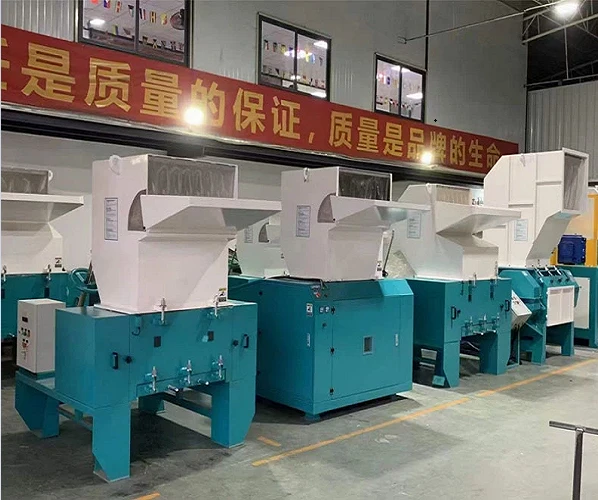
Our Factory
Our company has 11 years of production experiences in OEM processing services for plastic auxiliary equipment before its establishment. We always adhere to the "quality of survival, integrity management" as the value of Xucai environmental technology. Our company's products have passed the Europe CE certification. We strictly controls the whole process of product design, production, quality inspection and after-sale service, making Xucai's machines sell well domestic and foreign and received a consistent praise. Our machines have been sold to more than 50 countries and regions around the world.

FAQ
We're well-known as one of the leading vibrating sieve manufacturers and suppliers in China. Please feel free to buy high quality vibrating sieve made in China here from our factory. For price consultation, contact us.