

Hey there! As a supplier of plastic dryers, I often get asked this question: Can a plastic dryer be used for engineering plastics? Well, let's dive right in and explore this topic.

First off, let's understand what engineering plastics are. Engineering plastics are a group of plastic materials that have superior mechanical and thermal properties compared to general - purpose plastics. They're used in a wide range of applications, from automotive parts to electronic devices. These plastics include things like polycarbonate (PC), polyamide (PA), and polyoxymethylene (POM).
Now, why do engineering plastics need to be dried? Most engineering plastics have a certain level of moisture absorption. Moisture in the plastic can cause all sorts of problems during the processing. For example, it can lead to surface defects like bubbles, splay marks, or poor weld lines in the final product. It can also reduce the mechanical properties of the plastic, making the finished part weaker and less reliable.
So, can a plastic dryer do the job for engineering plastics? The short answer is yes, but it depends on the type of dryer and the specific engineering plastic.
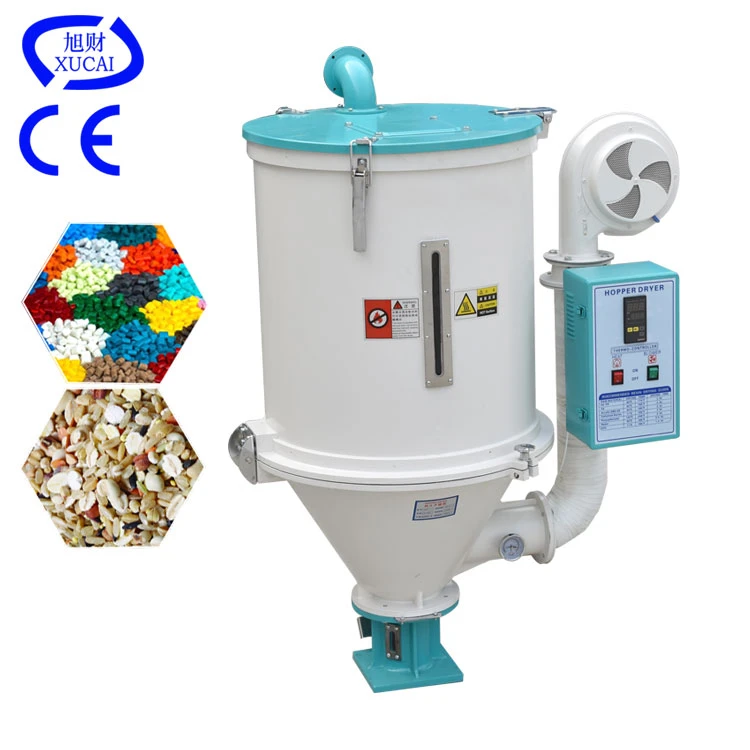
There are different types of plastic dryers out there. One common type is the raw plastic pellets dryer. This type of dryer is designed to remove moisture from plastic pellets before they go into the processing machine. You can check out our Raw Plastic Pellets Dryer for more details. It works by circulating hot air around the pellets, which helps to evaporate the moisture.
For many engineering plastics, a raw plastic pellets dryer can be quite effective. However, some engineering plastics are more sensitive to moisture and require a more precise drying process. That's where a hot air plastic material dryer comes in. This type of dryer can provide a more controlled environment for drying. It can maintain a specific temperature and humidity level, which is crucial for drying certain engineering plastics. You can find more about our Hot Air Plastic Material Dryer.
Another option is the hot air plastic dryer machine. This is a more advanced version that often comes with additional features like better air circulation and temperature control. It can be a great choice for drying engineering plastics that need a high - quality drying process. Check out our Hot Air Plastic Dryer Machine if you're interested.
Let's take a closer look at some specific engineering plastics and how they can be dried.
Polycarbonate (PC) is a widely used engineering plastic. It has a relatively high moisture absorption rate. To dry PC, you need to be careful with the temperature. If the temperature is too high, it can cause the PC to degrade. A good plastic dryer can help maintain the right temperature and remove the moisture effectively.
Polyamide (PA), also known as nylon, is another important engineering plastic. PA has a strong affinity for water, and it can absorb a significant amount of moisture. A well - designed plastic dryer is essential for drying PA. It needs to be dried at a specific temperature and for a certain period to ensure that all the moisture is removed.
Polyoxymethylene (POM) is a high - performance engineering plastic. It's less hygroscopic compared to some other engineering plastics, but it still needs to be dried properly. A plastic dryer can help in removing any surface moisture and ensuring a smooth processing.
When choosing a plastic dryer for engineering plastics, there are a few things to consider.
First, the drying capacity. You need to make sure that the dryer can handle the amount of plastic you're processing. If you have a large - scale production, you'll need a dryer with a high capacity.
Second, the temperature control. Different engineering plastics have different optimal drying temperatures. A good dryer should be able to maintain a stable temperature within the required range.
Third, the air circulation. Proper air circulation is important for even drying. A dryer with good air circulation can ensure that all the plastic pellets are dried uniformly.
In addition to these technical aspects, you also need to think about the cost - effectiveness. You want a dryer that can do a good job without breaking the bank.
As a plastic dryer supplier, we've seen firsthand the importance of using the right dryer for engineering plastics. We've helped many customers solve their drying problems and improve the quality of their products.
If you're in the market for a plastic dryer for your engineering plastics, don't hesitate to reach out. We can provide you with more information about our products, and we're happy to help you choose the right dryer for your specific needs. Whether you're a small - scale manufacturer or a large - scale production facility, we have a solution for you.
In conclusion, a plastic dryer can definitely be used for engineering plastics. With the right type of dryer and proper operation, you can ensure that your engineering plastics are dried effectively, leading to high - quality products. So, if you're looking to improve your plastic processing, consider investing in a good plastic dryer.
References
- "Plastics Processing Handbook"
- Technical documents from engineering plastic manufacturers