

Can a vibrating screen sieve be used for coffee bean screening?
As a supplier of vibrating screen sieves, I am frequently asked whether our products can be effectively used for coffee bean screening. In this blog post, I will delve into the topic, exploring the feasibility, benefits, and considerations of using a vibrating screen sieve for this specific application.
The Need for Coffee Bean Screening
Coffee beans, upon harvest, come in various sizes and qualities. Some may be under - developed, while others could be damaged or mixed with foreign materials such as twigs, stones, or leaves. Screening coffee beans is a crucial step in the coffee production process. It helps to ensure that only high - quality, uniformly sized beans are used for roasting and brewing, which ultimately affects the flavor and aroma of the final coffee product.
How Vibrating Screen Sieves Work
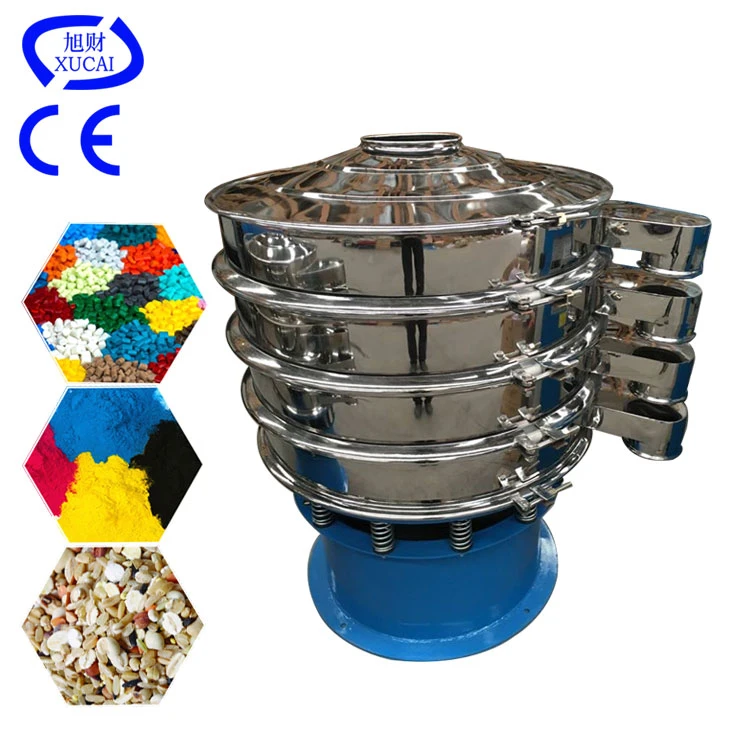
Vibrating screen sieves operate by generating vibrations that cause the materials placed on the sieve to move across the surface. The sieve has a mesh with specific openings. Particles smaller than the mesh size pass through, while larger ones are retained on the sieve. The vibrations can be adjusted in terms of amplitude and frequency to optimize the screening process for different materials.
Feasibility of Using Vibrating Screen Sieves for Coffee Bean Screening
The answer is a resounding yes. Vibrating screen sieves are highly suitable for coffee bean screening for several reasons.
Size Separation
Coffee beans vary in size, and a vibrating screen sieve can effectively separate them into different size fractions. By using sieves with different mesh sizes, producers can obtain beans of consistent size, which is important for even roasting. Uniformly sized beans roast more evenly, resulting in a more balanced flavor profile in the final coffee.
Removal of Foreign Materials
Foreign materials such as stones, twigs, and leaves are often mixed with coffee beans during harvesting. A vibrating screen sieve can easily separate these unwanted materials from the beans. The larger foreign objects will be retained on the upper sieve layers, while the coffee beans will pass through or be sorted according to their size.
Efficiency
Vibrating screen sieves are designed for high - throughput screening. They can process a large quantity of coffee beans in a relatively short period. This is especially beneficial for large - scale coffee producers who need to screen a significant volume of beans to meet market demand.
Types of Vibrating Screen Sieves for Coffee Bean Screening
There are several types of vibrating screen sieves that can be used for coffee bean screening.
Stainless Steel Circular Vibrating Sieve
The Stainless Steel Circular Vibrating Sieve is a popular choice. It is made of high - quality stainless steel, which is resistant to corrosion and easy to clean. The circular design allows for a more efficient and uniform distribution of the coffee beans on the sieve surface. The vibrations are evenly transmitted, ensuring that all the beans are effectively screened.
Ultrasonic Vibrating Screen Sifter
The Ultrasonic Vibrating Screen Sifter is another option. This type of sieve uses ultrasonic technology in addition to traditional vibrations. The ultrasonic waves prevent the coffee beans from clogging the sieve mesh, which is especially useful when dealing with fine particles or beans with irregular shapes.
Industrial Vibrating Screen
For large - scale coffee production, the Industrial Vibrating Screen is a great choice. It is designed to handle high - volume screening operations. It can be customized with multiple sieve layers to separate the coffee beans into different size fractions simultaneously.
Considerations When Using Vibrating Screen Sieves for Coffee Bean Screening
While vibrating screen sieves are suitable for coffee bean screening, there are some considerations that producers should keep in mind.

Mesh Selection
The choice of sieve mesh is critical. It should be selected based on the desired size of the coffee beans to be screened. If the mesh is too large, smaller beans and foreign materials may pass through. If it is too small, the screening process may be slow, and there is a risk of clogging.
Bean Damage
During the screening process, there is a potential for coffee beans to be damaged. The vibrations and the movement of the beans on the sieve can cause abrasion or breakage. Producers should ensure that the amplitude and frequency of the vibrations are set at an appropriate level to minimize bean damage.
Cleaning and Maintenance
Regular cleaning and maintenance of the vibrating screen sieve are essential. Coffee beans can leave residues on the sieve mesh, which can affect the screening efficiency. The sieve should be cleaned after each use to prevent the growth of bacteria and mold. Additionally, the mechanical components of the sieve, such as the motors and vibration generators, need to be inspected and maintained regularly to ensure smooth operation.
Conclusion
In conclusion, vibrating screen sieves are an excellent choice for coffee bean screening. They offer efficient size separation, effective removal of foreign materials, and high - throughput processing. With the right type of sieve and proper operation, coffee producers can improve the quality of their beans and ultimately the flavor of their coffee products.
If you are in the coffee production industry and are looking for a reliable vibrating screen sieve for your coffee bean screening needs, we are here to help. Our team of experts can assist you in selecting the most suitable sieve for your specific requirements. Contact us today to start a discussion about your coffee bean screening project and explore how our vibrating screen sieves can enhance your production process.
References
- Handbook of Food Processing Equipment, Second Edition.
- Coffee: Growth, Processing, Sustainable Production.