

Hey there! As a supplier of vibrating screen sieves, I often get asked about the screening capacity per square meter of these nifty machines. It's a crucial question, especially if you're in the market for a vibrating screen sieve for your industrial or commercial needs. So, let's dive right in and explore this topic in detail.
First off, what exactly is screening capacity per square meter? Well, it's a measure of how much material a vibrating screen sieve can process in a given amount of time over an area of one square meter. This metric is super important because it helps you figure out if a particular sieve is going to meet your production requirements. If you're dealing with large volumes of material, you'll need a sieve with a high screening capacity per square meter.
There are several factors that can affect the screening capacity per square meter of a vibrating screen sieve. One of the most significant factors is the type of material you're screening. Different materials have different characteristics, such as particle size, shape, density, and moisture content. For example, if you're screening a fine powder, you might need a sieve with a smaller mesh size to ensure proper separation. On the other hand, if you're dealing with larger particles, a coarser mesh might be sufficient.
The moisture content of the material also plays a big role. Wet materials tend to stick together, which can clog the sieve and reduce its screening capacity. In such cases, you might need to use a vibrating screen sieve with special features, like anti - clogging devices, to keep the screening process running smoothly.

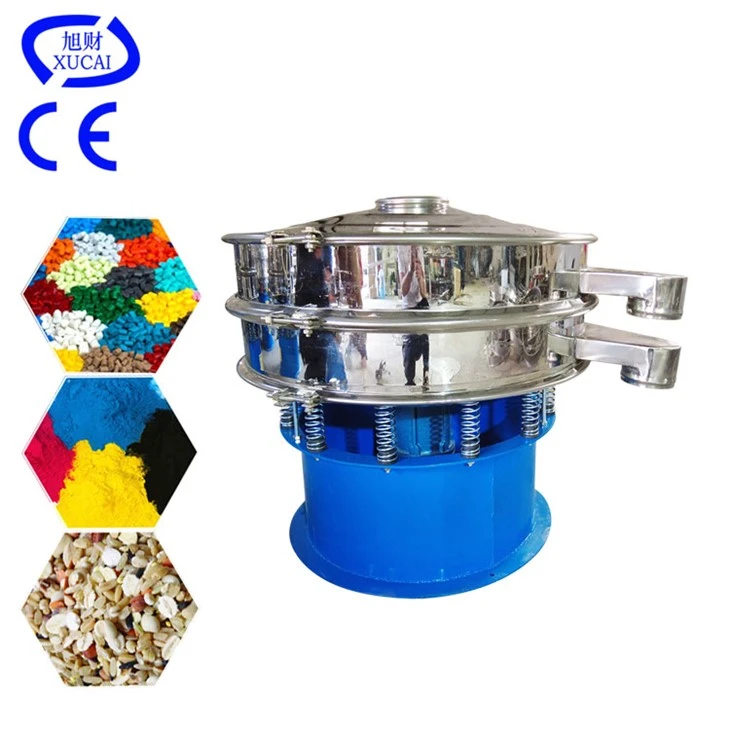
Another important factor is the vibration intensity of the sieve. The vibration helps to move the material across the sieve surface and through the mesh. A higher vibration intensity generally means a higher screening capacity, but it also needs to be balanced. Too much vibration can cause excessive wear and tear on the sieve and may even damage the equipment.
The inclination angle of the sieve is also a key consideration. An inclined sieve allows the material to move more quickly across the surface, which can increase the screening capacity. However, if the angle is too steep, the material might pass through the sieve too fast, resulting in incomplete separation.
Now, let's talk about some of the products we offer as a vibrating screen sieve supplier. We have a wide range of sieves to suit different applications. For instance, our Powder Vibrating Sieve Machine is specifically designed for screening fine powders. It has a high - precision mesh that can effectively separate particles of different sizes. This machine is great for industries like pharmaceuticals, food processing, and chemical manufacturing.
Our Stainless Steel Circular Vibrating Sieve is another popular choice. Made from high - quality stainless steel, it's durable and resistant to corrosion. This sieve is suitable for a variety of materials, including powders and granules. It offers a good balance between screening capacity and efficiency.
If you're looking for a sieve for large - scale industrial applications, our Industrial Vibrating Sifting Sieve For Powder is a top option. It's designed to handle high volumes of material and has a large screening area, which means a higher screening capacity per square meter.
To calculate the screening capacity per square meter of a vibrating screen sieve, you can use some general guidelines. However, it's important to note that these are just estimates, and the actual capacity can vary depending on the factors we discussed earlier. A common way to estimate the screening capacity is to consider the material's bulk density, the sieve's mesh size, and the vibration parameters.
Let's say you have a material with a bulk density of 0.8 g/cm³ and you're using a sieve with a mesh size of 0.5 mm. Based on industry standards, you might expect a screening capacity of around 1 - 2 tons per square meter per hour. But again, this can change if the material has a different moisture content or if the vibration intensity is adjusted.
When you're choosing a vibrating screen sieve, it's essential to do some testing. Most suppliers, including us, are happy to provide sample testing services. This way, you can see how the sieve performs with your specific material and get an accurate idea of its screening capacity per square meter.
In addition to the technical aspects, you also need to think about the maintenance and operation of the vibrating screen sieve. Regular maintenance, such as cleaning the sieve and checking the vibration components, can help to ensure optimal performance and a long lifespan. And easy - to - operate sieves can save you time and labor costs.
We understand that every customer has unique requirements. Whether you're a small - scale business or a large industrial enterprise, we're here to help you find the right vibrating screen sieve for your needs. Our team of experts can provide you with detailed information about the screening capacity per square meter of our products and offer customized solutions.
If you're interested in learning more about our vibrating screen sieves or want to discuss your specific requirements, don't hesitate to get in touch with us. We're always ready to have a chat and help you make the best decision for your business. Whether you need a sieve for powder screening, granule separation, or any other application, we've got you covered.
So, if you're in the market for a high - quality vibrating screen sieve, give us a shout. Let's work together to find the perfect solution for your screening needs and boost your production efficiency.
References:
- "Industrial Screening Handbook" - A comprehensive guide on screening technologies and capacity calculations.
- "Vibrating Screen Sieve Design and Operation" - An industry - specific publication that details the factors affecting screening capacity.