

The power of a plastic dryer plays a pivotal role in determining its overall performance. As a leading plastic dryer supplier, I have witnessed firsthand how different power levels can significantly impact various aspects of a plastic dryer's operation. In this blog, we will delve into the intricate relationship between the power of a plastic dryer and its performance, exploring both the advantages and potential drawbacks associated with different power settings.
Understanding the Basics of Plastic Dryer Power
Before we discuss the impact of power on performance, it's essential to understand what power means in the context of a plastic dryer. Power, measured in kilowatts (kW), represents the rate at which the dryer consumes electrical energy to generate heat and airflow. A higher - power dryer can generally produce more heat and stronger airflow compared to a lower - power one.
Impact on Drying Speed
One of the most obvious impacts of power on a plastic dryer's performance is the drying speed. A high - power plastic dryer can heat up the air more rapidly and generate a more forceful airflow. This allows it to transfer heat to the plastic materials more efficiently, thereby reducing the drying time. For example, in a large - scale plastic manufacturing plant where time is of the essence, a high - power Raw Plastic Pellets Dryer can dry a large quantity of raw plastic pellets much faster than a low - power alternative. This increased drying speed can lead to higher production rates, enabling manufacturers to meet tight deadlines and increase their overall output.
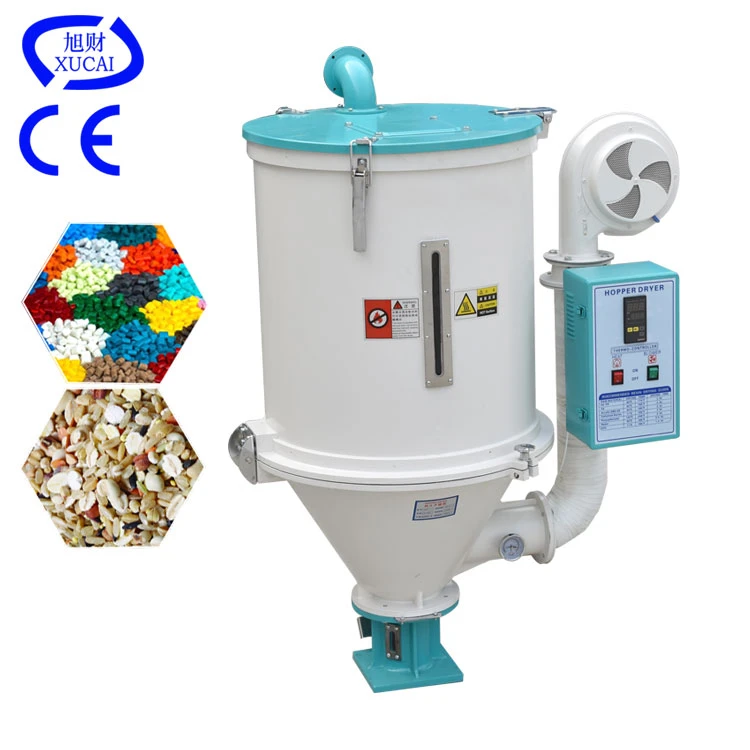

Conversely, a low - power plastic dryer may take significantly longer to dry the same amount of plastic. This can slow down the entire production process, causing delays and potentially increasing production costs. In some cases, the extended drying time may also lead to inconsistent drying results, as the plastic materials may be exposed to heat for too long in certain areas while remaining insufficiently dried in others.
Impact on Drying Efficiency
Power also has a direct impact on the drying efficiency of a plastic dryer. A dryer with adequate power can maintain a more consistent temperature and airflow throughout the drying chamber. This consistency is crucial for ensuring that all the plastic materials are dried evenly, without any over - drying or under - drying. For instance, a Hot Air Plastic Dryer Machine with the right power can distribute hot air uniformly around the plastic granules, removing moisture effectively while preserving the quality of the plastic.
On the other hand, if the power is too low, the dryer may struggle to maintain the required temperature and airflow. This can result in uneven drying, where some parts of the plastic are left wet while others are over - dried. Over - drying can cause the plastic to become brittle and lose its mechanical properties, while under - drying can lead to issues such as poor adhesion, warping, and reduced strength in the final plastic products.
Impact on Energy Consumption
While high - power dryers offer faster drying speeds and better efficiency, they also consume more energy. This is an important consideration for manufacturers, as energy costs can account for a significant portion of their production expenses. A plastic dryer that is too powerful for the specific drying requirements may waste energy by generating more heat and airflow than necessary. For example, if a small - scale plastic workshop only needs to dry a small amount of plastic at a time, using a high - power dryer will result in unnecessary energy consumption.
In contrast, a low - power dryer consumes less energy, but as mentioned earlier, it may not be able to meet the production demands in terms of drying speed and efficiency. Therefore, it is essential to strike a balance between power, performance, and energy consumption. Many modern plastic dryers are designed with energy - saving features, such as variable speed fans and temperature control systems, which can help optimize energy usage based on the actual drying needs.
Impact on Equipment Lifespan
The power of a plastic dryer can also affect its lifespan. A dryer that is operated at a power level beyond its design capacity may experience excessive wear and tear. High - power operation can put more stress on the heating elements, fans, and other components of the dryer, leading to more frequent breakdowns and a shorter overall lifespan. For example, if a dryer is designed for a maximum power of 5 kW but is constantly operated at 7 kW, the heating elements may overheat and burn out more quickly, and the fan motor may also be subject to increased mechanical stress.
Conversely, a dryer that is under - powered for the intended application may also have a reduced lifespan. When a low - power dryer is forced to work harder to achieve the desired drying results, it may run continuously at a high load, which can also cause premature component failure. Therefore, it is crucial to select a plastic dryer with the appropriate power rating for the specific drying task to ensure long - term reliability and durability.
Selecting the Right Power for Your Plastic Dryer
When choosing a plastic dryer, it is important to consider several factors to determine the appropriate power. The type and quantity of plastic materials to be dried are key considerations. For example, if you are drying large volumes of thick - walled plastic parts, you will likely need a higher - power dryer to ensure efficient and timely drying. The required drying time and production rate also play a role. If you need to dry a large amount of plastic quickly, a high - power dryer may be necessary.
Additionally, the available power supply in your facility should be taken into account. Make sure that your electrical system can support the power requirements of the dryer you choose. It is also advisable to consult with a professional plastic dryer supplier, like us, who can provide expert advice based on your specific needs.
Conclusion
In conclusion, the power of a plastic dryer has a profound impact on its performance, including drying speed, efficiency, energy consumption, and equipment lifespan. As a plastic dryer supplier, we understand the importance of selecting the right power for your specific application. Our range of Hot Air Plastic Granules Dryer and other plastic drying solutions are designed to offer optimal performance at various power levels.
If you are in the market for a plastic dryer and need assistance in choosing the right power and model for your needs, please do not hesitate to contact us. Our team of experts is ready to provide you with detailed information and guidance to help you make an informed decision. We look forward to the opportunity to work with you and contribute to the success of your plastic manufacturing operations.
References
- Smith, J. (2020). "Principles of Plastic Drying". Plastic Manufacturing Journal.
- Brown, A. (2019). "Energy - Efficient Plastic Drying Solutions". Industrial Plastics Review.
- Green, C. (2021). "The Impact of Power on Plastic Dryer Performance". International Plastics Conference Proceedings.