

In the realm of plastic processing, the mixer machine stands as a pivotal piece of equipment. It plays a crucial role in blending various plastic materials, additives, and pigments to achieve the desired consistency and quality for further manufacturing processes. As a seasoned plastic mixer machine supplier, I often encounter inquiries regarding the types of motors used in these machines. In this blog post, I will delve into the different kinds of motors commonly employed in plastic mixer machines, their characteristics, and the factors to consider when choosing the right motor for your specific needs.
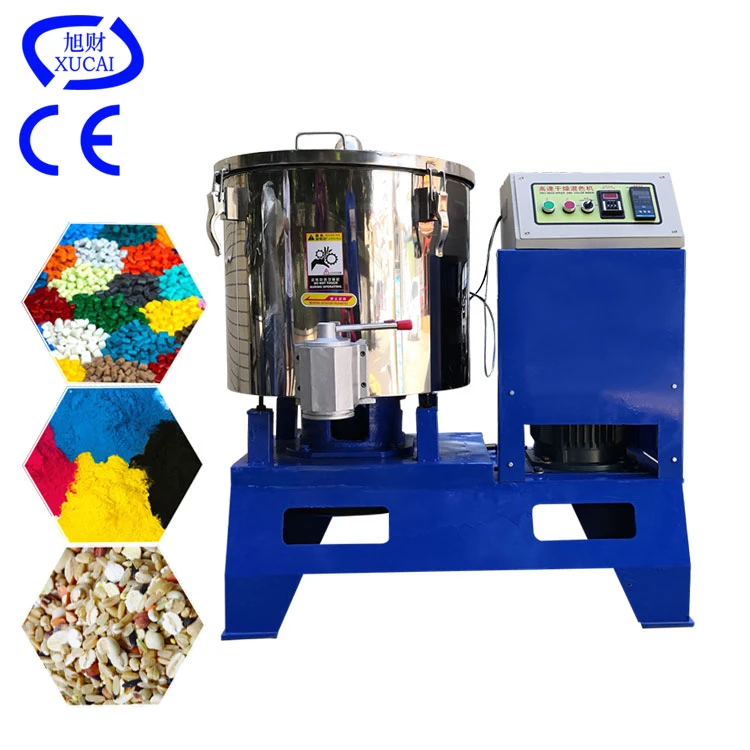

Types of Motors Used in Plastic Mixer Machines
1. AC Induction Motors
AC induction motors are perhaps the most widely used motors in plastic mixer machines. They are known for their simplicity, reliability, and cost - effectiveness. These motors operate based on the principle of electromagnetic induction. When an alternating current is applied to the stator windings, a rotating magnetic field is created, which induces a current in the rotor, causing it to rotate.
One of the key advantages of AC induction motors is their robustness. They can withstand harsh industrial environments, including high temperatures and vibrations, which are common in plastic mixing operations. They also have a relatively long lifespan with minimal maintenance requirements. For example, in our Vertical Plastic Granules Mixer, we often use AC induction motors due to their ability to provide a stable and continuous power supply for the mixing process.
However, AC induction motors have some limitations. They typically have a fixed speed, which can be a drawback if you need to adjust the mixing speed according to different plastic materials or mixing requirements. To overcome this, variable frequency drives (VFDs) can be used to control the speed of the motor, but this adds to the overall cost of the system.
2. DC Motors
DC motors have been used in plastic mixer machines for a long time, especially in applications where precise speed control is required. These motors operate on direct current and can be classified into two main types: brushed and brushless DC motors.
Brushed DC motors are relatively simple in design and are cost - effective. They have a commutator and brushes that transfer electrical power to the rotor. This design allows for easy speed control by adjusting the voltage applied to the motor. In our High Speed Plastic Mixer Drying Machine, brushed DC motors can be a good choice when high - speed mixing and quick speed adjustments are needed.
On the other hand, brushless DC motors offer several advantages over brushed DC motors. They have a longer lifespan because there are no brushes to wear out, which reduces maintenance costs. They also have higher efficiency and better speed regulation. However, brushless DC motors are more expensive and require more complex control electronics.
3. Servo Motors
Servo motors are high - performance motors that are increasingly being used in plastic mixer machines, especially in applications where high precision and accuracy are crucial. These motors are designed to control both the position and speed of the mixer.
Servo motors work in conjunction with a servo drive, which receives feedback from a position sensor (such as an encoder) to ensure that the motor moves to the desired position and maintains the set speed. This makes them ideal for applications where the mixing process requires precise control, such as in the production of high - quality plastic products with strict specifications.
In our Stainless Steel Vertical Plastic Mixer Machine, servo motors can be used to achieve accurate mixing and ensure consistent product quality. However, servo motors are more expensive than AC induction or DC motors, and they also require more sophisticated control systems.
Factors to Consider When Choosing a Motor for a Plastic Mixer Machine
1. Power Requirements
The power of the motor is one of the most important factors to consider. It depends on the size of the mixer machine, the type of plastic materials being mixed, and the mixing speed required. For example, if you are mixing large volumes of high - viscosity plastic materials, you will need a motor with higher power to overcome the resistance during the mixing process.
2. Speed Control
As mentioned earlier, different plastic materials may require different mixing speeds. If you need to adjust the speed frequently, a motor with good speed control capabilities, such as a DC motor or a servo motor, would be a better choice. AC induction motors can also be used with VFDs for speed control, but this adds to the cost and complexity of the system.
3. Cost
Cost is always a significant factor in any purchasing decision. AC induction motors are generally the most cost - effective option, followed by DC motors. Servo motors are the most expensive but offer the highest level of performance and precision. You need to balance your budget with your performance requirements when choosing a motor.
4. Maintenance
The maintenance requirements of the motor can also affect your long - term costs. AC induction motors have relatively low maintenance requirements, while brushed DC motors may require regular brush replacement. Brushless DC motors and servo motors have lower maintenance needs but may require more specialized knowledge for troubleshooting and repair.
Conclusion
Choosing the right motor for a plastic mixer machine is a critical decision that can significantly impact the performance and cost - effectiveness of your plastic processing operations. As a plastic mixer machine supplier, we understand the importance of matching the motor to the specific needs of our customers. Whether you need a reliable and cost - effective AC induction motor for a standard mixing application or a high - precision servo motor for a specialized process, we can provide you with the right solution.
If you are interested in our plastic mixer machines or have any questions about the motors used in them, please feel free to contact us for a detailed discussion. Our team of experts is always ready to assist you in making the best choice for your business.
References
- "Industrial Electric Motors: Principles, Applications, and Control" by Austin Hughes
- "Motor and Drive Selection Handbook" by Paul D. Maynard