

What is the mixing principle of a plastic mixer machine?
As a proud supplier of plastic mixer machines, I'm delighted to delve into the fascinating world of the mixing principles behind these essential pieces of equipment. Plastic mixer machines play a pivotal role in the plastic processing industry, enabling the uniform blending of various plastic materials, additives, and colorants. Understanding their mixing principles is crucial for optimizing production processes, ensuring product quality, and achieving desired results.
The Basics of Plastic Mixing
Before we explore the specific mixing principles, let's first understand why mixing is so important in the plastic industry. Plastics are used in a wide range of applications, from packaging materials to automotive components, and the quality of the final product depends largely on the uniformity of the plastic mixture. A well - mixed plastic blend ensures consistent physical properties, such as strength, durability, and color, throughout the product.
There are several types of materials that need to be mixed in plastic processing. These include raw plastic resins, which come in the form of pellets or powders; additives like stabilizers, lubricants, and flame retardants; and colorants, which can be in liquid, powder, or masterbatch form.
Different Mixing Principles
- Convective Mixing
Convective mixing is one of the most common principles used in plastic mixer machines. It involves the bulk movement of material within the mixing chamber. In a plastic mixer, this can be achieved through the use of agitators, impellers, or rotating paddles. As these components move, they push and pull the plastic materials, causing them to circulate within the chamber.
For example, in our High Speed Plastic Mixer Drying Machine, the high - speed rotation of the impeller creates strong convective currents. The plastic pellets or powders are lifted from the bottom of the chamber and thrown towards the walls, then fall back to the center, creating a continuous flow. This movement helps to distribute the different components evenly throughout the mixture.
Convective mixing is particularly effective for large - scale mixing and for quickly bringing different materials together. However, it may not be sufficient on its own to achieve a highly homogeneous mixture, especially when dealing with fine additives or colorants.
- Diffusive Mixing
Diffusive mixing is based on the principle of molecular diffusion. When different materials are in close contact, the molecules of one material tend to spread into the spaces between the molecules of another material. This process occurs naturally over time but can be accelerated in a plastic mixer.
In a mixer, diffusive mixing is enhanced by increasing the surface area of contact between the different materials. For instance, when the plastic pellets are broken down into smaller particles during the mixing process, the surface area available for diffusion increases. This allows the additives and colorants to penetrate more deeply into the plastic matrix.
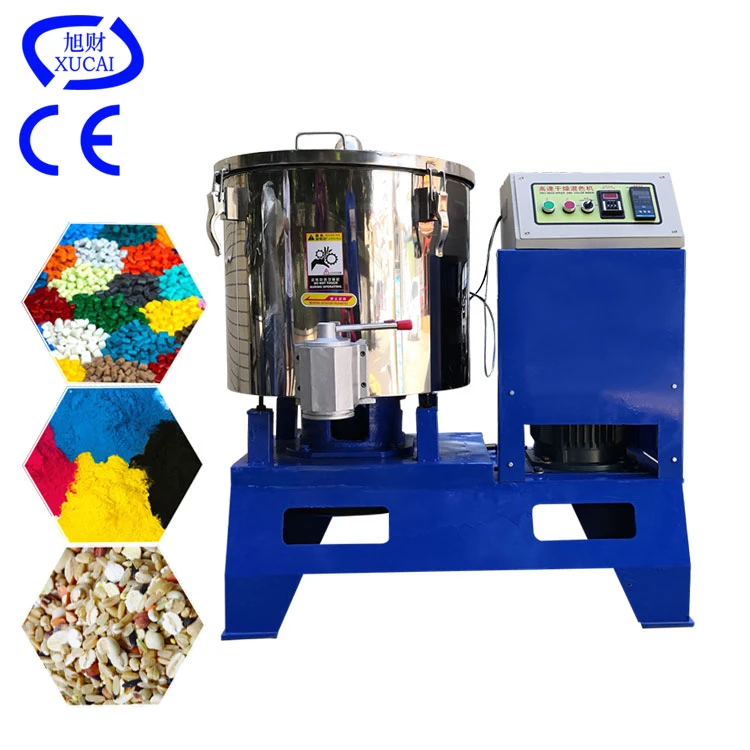

In our Plastic Pellets Mixer Machine, the mechanical action of the mixing elements helps to break the pellets and expose more surface area for diffusive mixing. The longer the mixing time and the more intense the mixing action, the greater the degree of diffusive mixing that can be achieved.
- Shear Mixing
Shear mixing involves the application of a shearing force to the plastic materials. This force is created when two adjacent layers of material move at different speeds. In a plastic mixer, shear can be generated by the rotation of the mixing blades or the flow of the material through narrow gaps.
Shear mixing is very effective for breaking up agglomerates of additives or colorants. For example, masterbatch colorants often come in the form of small clusters. The shearing force in the mixer can break these clusters into individual particles and disperse them evenly throughout the plastic matrix.
Our Plastic Industry Masterbatch Color Mixer is designed to generate high shear forces. The specially designed blades and the precise control of the mixing speed ensure that the masterbatch is thoroughly dispersed, resulting in a uniform color distribution in the final plastic product.
Factors Affecting Mixing Performance
-
Mixing Time
The length of the mixing process is a critical factor. Too short of a mixing time may result in an incomplete mixture, with pockets of unmixed materials remaining. On the other hand, over - mixing can lead to degradation of the plastic materials, especially if the temperature rises too high during the process. It is important to determine the optimal mixing time based on the type of materials being mixed, the volume of the batch, and the mixing principle being used. -
Mixing Speed
The speed at which the mixer operates affects both the convective and shear mixing processes. Higher speeds generally increase the intensity of mixing, but they also generate more heat. In some cases, excessive heat can cause the plastic to melt or degrade, affecting the quality of the final product. Therefore, the mixing speed needs to be carefully adjusted to achieve the best balance between mixing efficiency and material integrity. -
Material Properties
The properties of the plastic materials themselves, such as their viscosity, particle size, and density, also have a significant impact on the mixing process. Materials with high viscosity may require more intense mixing to achieve a uniform blend, while materials with different densities may tend to separate if not mixed properly.
Ensuring Optimal Mixing
To ensure that our plastic mixer machines deliver the best mixing results, we incorporate several advanced features. For example, our mixers are equipped with precise temperature control systems to prevent overheating during the mixing process. The mixing elements are designed to provide a combination of convective, diffusive, and shear mixing, maximizing the homogeneity of the mixture.
We also offer customization options to meet the specific needs of our customers. Different industries may have different requirements for plastic mixing, and we can tailor our machines to suit those needs, whether it's adjusting the mixing speed, the type of mixing blades, or the size of the mixing chamber.
Conclusion
In conclusion, the mixing principle of a plastic mixer machine is a complex but essential aspect of the plastic processing industry. By understanding the convective, diffusive, and shear mixing principles, and by considering the factors that affect mixing performance, we can produce high - quality plastic products with consistent properties.
As a trusted plastic mixer machine supplier, we are committed to providing the best solutions for your mixing needs. Our range of products, including the Plastic Industry Masterbatch Color Mixer, High Speed Plastic Mixer Drying Machine, and Plastic Pellets Mixer Machine, are designed to meet the diverse requirements of the plastic industry.
If you are interested in learning more about our plastic mixer machines or discussing your specific mixing needs, we encourage you to get in touch with us. Our team of experts is ready to provide you with detailed information and help you make the best choice for your business.
References
- Rosato, D. V., & Rosato, D. V. (2004). Plastics Processing Data Handbook. Springer Science & Business Media.
- Grace, J. R., & Campbell, F. C. (2014). Composite Materials Manufacturing: Processes, Principles, and Applications. Wiley.